The Pawnee Earth Lodge was one of the late John White’s great ideas. John was the Field Museum’s first Native staff member, hired in the mid-1970s as Native American Outreach Program Director and Pawnee Earth Lodge Project Director.
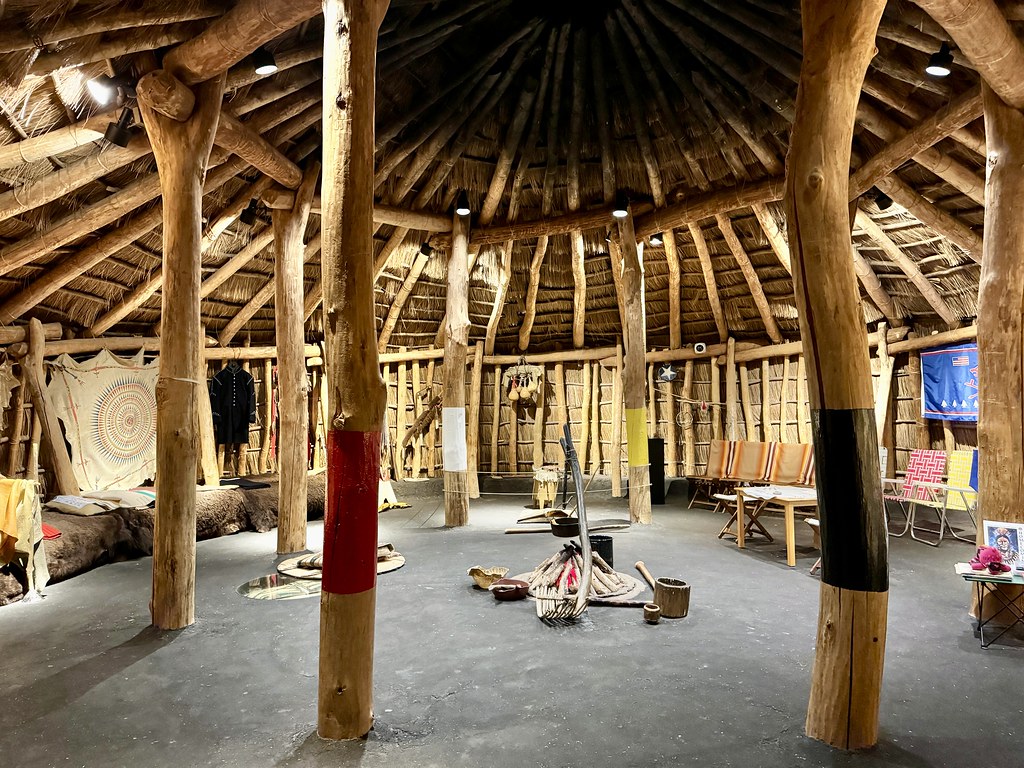
When John brought Native kids from Chicago’s Uptown neighborhood to the museum, they were put off. The Indian halls, as they were called, looked dead, in contrast to the energy, cultural revitalization, and anti-termination activism found on their home reservations, and in Native urban gatherings. He proposed that the museum create a full-scale replica of a traditional Native dwelling. The structure would be fully enclosed, screening off the nearby displays and immersing visitors in a richly furnished interior.
Key Figure
John White (1937–2006)
Native American Outreach Program Director & Pawnee Earth Lodge Project Director, Field Museum of Natural History, 1973–1976
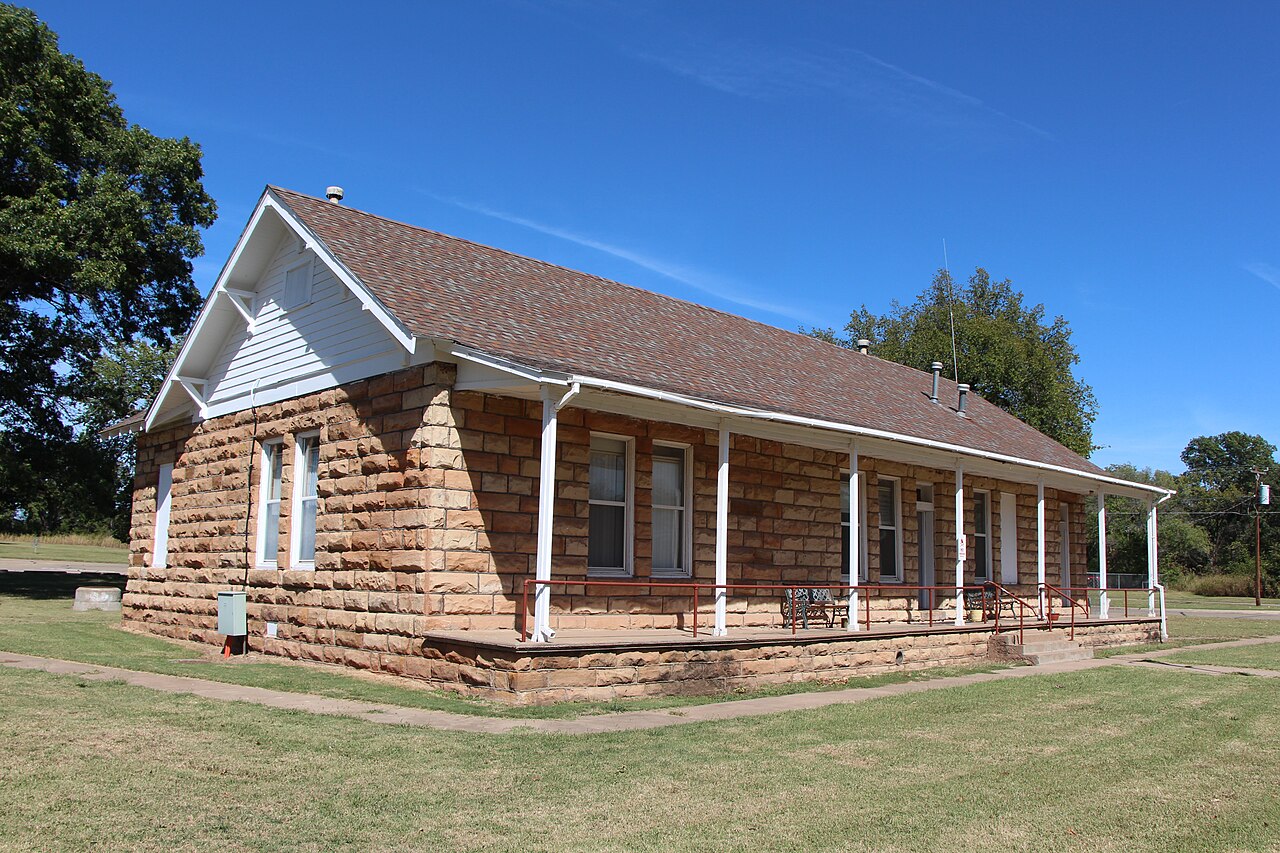
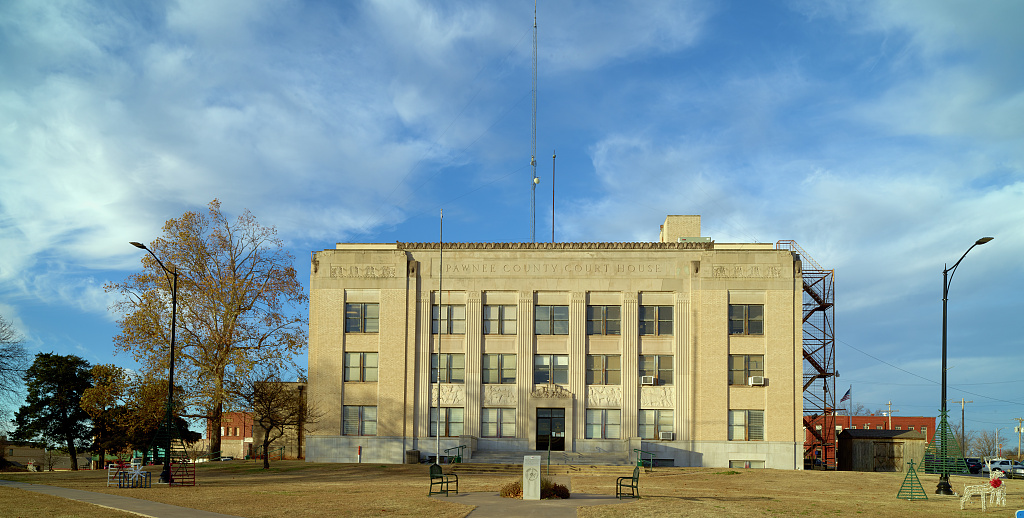
Of Shawnee, Cherokee, and Scots descent, White held an M.A. from the University of Chicago and a second M.A. in anthropology from Stanford. He was the Field Museum’s first Native staff member. Before a single beam was sourced, he traveled to Pawnee, Oklahoma and secured permission from the Nasharo Council — receiving formal sign-off from all four band leaders in January 1975. He later directed the Sacred Circles exhibition at the Nelson-Atkins Gallery in Kansas City and in 1985 founded the Ancient Lifeways Institute in Illinois. His papers are held at the Newberry Library, Chicago
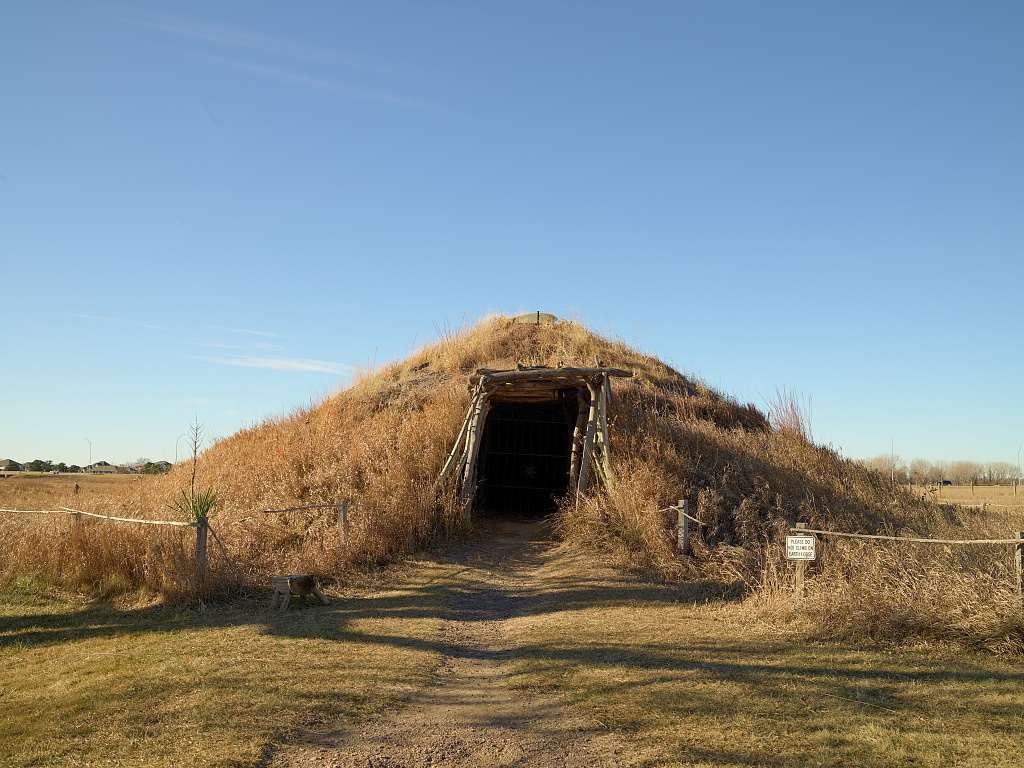
A Pawnee earth lodge was a likely candidate for the replica. The self-enclosed, circular structure could be scaled down to fit into the intersection of two galleries in the Indian halls. But before moving ahead with his idea, John traveled to Pawnee, Oklahoma to meet with elders and council members. Their permission and support were essential. They recommended a key reference, The Lost Universe: Pawnee Life and Culture, by anthropologist Gene Weltfish, who had worked intensively with Pawnee informants. He also learned that tribal members had last built an earth lodge as a display at the St. Louis World’s Fair in 1904.
Building it
The mid-1970s was a time of gas shortages and widespread unemployment. The federal CETA program (Comprehensive Employment and Training Act) infused enough cash into the project to pay a master carpenter, a multi-talented artisan, and a group of what would now be called interns. Under John’s direction, the education department committed to using traditional techniques and materials to build and furnish the lodge with authentic replicas. From the beginning, the Pawnee earth lodge was conceived as a self-enclosed environment that would immerse visitors in a traditional Native dwelling. The interns obtained a cottonwood tree and willow saplings, and researched methods and tools for hide tanning, sewing, and a host of other details.
“The Indian halls, as they were called, looked dead — in contrast to the energy, cultural revitalization, and anti-termination activism found on their home reservations.”
Of course, there were compromises to be made. A traditional earth lodge had a smoke hole and a doorway; its only light source was the fire at the center of the earthen floor. A fire in a museum exhibit was out of the question. Electric light was too jarringly modern, but a pitch-dark interior wouldn’t work for visitors. Replica objects — from buffalo robes to drums and parfleches — would disintegrate or disappear rapidly with unsupervised use. The team decided to recruit volunteer docents who would receive special training to host visitors in the lodge. When not staffed, the lodge would be closed off, with a chain-link door allowing visitors to look inside.
There was also a protracted fight with the security department. John affirmed that Native dwellings always open to the east. Because of the earth lodge’s location in the gallery, an east-facing door would face toward the back of the space. All kinds of dire scenarios were envisioned by the head of security. But the team held firm, the doorway faced east, and the imagined high-crime area did not materialize.
A cross-cultural moment
The Field’s master carpenter drew plans for the lodge based on photographs and Weltfish’s descriptions. Some crucial details were missing, and he had to work out how to make it function. A Pawnee elder visited the museum when the lodge was nearly complete. As a young man, he had been one of the tribal members who built the earth lodge for the St. Louis World’s Fair in 1904, and he remembered some of those missing details. When the master carpenter explained, humbly, how he had addressed the remaining problems, it turned out he had done just what the Pawnees would have done. What a great cross-cultural moment.
“They found old Edison cylinder recordings of Pawnee songs, and sat up all night listening and singing.”
A busload of Pawnees came from Oklahoma for the opening of the earth lodge. They must have had hotel rooms, but they spent most of their time at the museum. John White arranged for them to have complete access to the Pawnee collections. One woman recognized a comb that had belonged to her. They found old Edison cylinder recordings of Pawnee songs, and sat up all night listening and singing. They set the agenda for the opening ceremony, with moving speeches of recognition and thanks, and a demonstration of tribal sovereignty — tribal chair equal to museum director. Some of the elders presented a blanket to director Lee Webber and wrapped him in it, leaving him speechless and visibly moved. That erstwhile accountant from Chicago’s North Shore had likely never imagined such a moment.
The lodge today
In the early 2000s, the earth lodge was taken apart, relocated, and rebuilt, prolonging the life of this very popular exhibit and adding new information and artifacts from contemporary Pawnee life. When it was rededicated, another delegation from the Pawnee Nation traveled to Chicago to attend. The lodge now sits within the Field Museum’s permanent exhibition Native Truths: Our Voices, Our Stories, opened May 2022 and created in partnership with more than 130 collaborators representing over 105 tribes. Inside: tools, textiles, animal hides, games, and beds covered in bison furs. During select hours, trained volunteers host visitors inside the lodge.
Golland, Susan. “The Pawnee Earth Lodge at the Field Museum.” In Wali, Alaka, and Tom Skwerski, eds., The Future Is Indigenous: Stories From the New Native North America Hall at the Field Museum (BAR Publishing, 2024; open access CC BY-NC-ND 4.0; doi.org/10.30861/9781407361192).
John White Papers, Newberry Library (archives.newberry.org).
Weltfish, Gene. The Lost Universe: Pawnee Life and Culture (Basic Books, 1965).
Field Museum of Natural History. “Pawnee Earth Lodge,” Native Truths: Our Voices, Our Stories (permanent exhibition, opened May 2022; fieldmuseum.org).
Photographs: Field Museum lodge interior — w_lemay / Flickr, CC BY-SA 2.0 (flickr.com). All other photographs: Carol M. Highsmith Archive, Library of Congress; no known restrictions on publication (LC-DIG-highsm-69728, -65466, -65384).