The Native American Graves Protection and Repatriation Act has governed the relationship between federally funded institutions and tribal nations since 1990, but the January 12, 2024 Final Rule represents the most significant regulatory overhaul in the law’s history. For practitioners, institutions, and tribal nations navigating this landscape, understanding the precise scope of these new requirements — and what the rule does not do — is essential to sound compliance strategy.
What the rule actually requires
A new duty of care
Perhaps the most consequential change in the 2024 rule is the establishment of an affirmative Duty of Care. Institutions must now consult, accommodate, and obtain consent before exhibition, access, or research involving covered cultural items and human remains. The immediate real-world impact was visible within weeks of the rule taking effect.
At the American Museum of Natural History in New York City, curators abruptly closed two large exhibit halls dedicated to Native American cultures. At the Field Museum in Chicago, the Cleveland Museum of Art, and other institutions, staff used panels, tarps, and paper to conceal displays of Indigenous artifacts. The new federal regulations prohibit the display of items subject to NAGPRA without tribal consent and ban all research done without tribal consent. One hand-written note at a Bowers Museum display case captured the institutional uncertainty: “Sorry for the inconvenience! We hope to re-open this exhibit at some point in the future.”

The American Museum of Natural History spent nearly $20 million updating its Northwest Coast Hall through a broad collaboration that meets the new requirements. Indigenous leaders say the new hall reflects the thriving contemporary Indigenous cultures of the territory. This contrast — between institutions scrambling to cover cases versus those that had already invested in genuine partnership — illustrates what the Duty of Care distinguishes in practice.
A step-by-step cultural affiliation process
The rule codifies a structured process under §10.3 for determining cultural affiliation, and critically, it elevates Native American traditional knowledge to the status of expert evidence. A single line of evidence — such as oral histories — is now sufficient to prove cultural affiliation. Institutions can no longer rely solely on archaeological or anthropological analysis. Tribal oral histories, ceremonial knowledge, and community accounts must be meaningfully incorporated and documented.
Stricter consultation standards
The 2024 rule requires institutions to “strive for consensus” and fully document both outcomes and points of disagreement. This is government-to-government engagement, and institutional relationships must be sustained at the organizational level — not by individual staff members who may depart.
A five-year inventory update deadline
All federally funded institutions are required, in consultation with tribes, to update inventories of human remains and associated funerary objects by January 10, 2029. This deadline is measured in calendar days throughout — not business days — a compressed timeline that caught many compliance officers off guard.
Enhanced discovery protocols
For inadvertent discoveries on federal or tribal lands, the rule now requires a three-day notification and a sixty-day Plan of Action. These timelines demand proactive planning; waiting for a discovery to occur before developing protocols is no longer viable.
What the rule does not do
It does not conjure institutional capacity
Deadlines are enforceable; capacity is not. The gap between obligation and resources is starkly visible in the case of the Ohio History Connection, which holds over 7,900 unrepatriated human remains — the largest such collection in the country — yet in the roughly three decades prior to 2024 had returned fewer than 20 ancestors to tribes. The nonprofit is now actively consulting with 45 tribes tied to the Ohio River Valley, and staff must cross-reference what timeframe remains are from with the geography of where they came from, and then determine who would have been on that land at that time period. Tribal representatives describe the work as “slow moving” — not for lack of goodwill, but because tribal nations and museums foot most of the associated costs themselves.
It does not guarantee that pledges will be kept
Well-resourced institutions with explicit commitments have still fallen short. Harvard’s Peabody Museum made a high-profile 2022 pledge to complete the repatriation of all ancestors within three years, but as of December 31, 2025, the Peabody has repatriated 5,464 ancestors while 2,482 remain in active consultation and another 2,161 are pending consultation — leaving thousands still in the museum’s possession past the target deadline. The Peabody has now extended its timeline by two years and plans to proactively reach out to tribes to initiate consultation. The rule accelerated efforts — 55 Federal Register notices were published in 2024, the most in a single year — but did not compel completion on the institution’s own promised schedule.
“For too long, ancestors and Tribal cultural items have been disconnected from their communities and resting on museum shelves.”
Bryan Newland, Assistant Secretary for Indian Affairs, U.S. Dept. of the Interior
It does not override the statute
A critical nuance discussed in NAGPRA practitioner networks is the relationship between the 2024 regulations and the underlying 1990 law. The statute still governs in cases of direct conflict. A determination that affiliation “cannot be determined” does not preclude future affiliation being established, and under 10.10(k), remains may be transferred or reinterred even without a determined affiliation. The law supersedes regulations; the new regulatory process is the operative framework, but the statute remains the ceiling.
It does not resolve competing claims
The rule establishes a priority order — lineal descendants take precedence over tribal claims for certain categories under §10.9 — but does not adjudicate specific disputes. When a family asserts an object as cultural patrimony, or when newly recognized tribes seek affiliation with remains previously deemed unidentifiable, the institution must engage the formal competing claims process. There are no universal answers, and the National NAGPRA Program actively encourages institutions and tribes to contact them directly for case-specific guidance.
It does not extend to state-recognized tribes
NAGPRA consultation remains a government-to-government process between federally funded institutions and federally recognized Indian tribes and Native Hawaiian Organizations. State-recognized tribes may be valued community partners — as illustrated by the complex institutional dynamics documented around institutions like Rutgers University — but they are not formal parties to the NAGPRA consultation process.
It does not substitute for enforcement
Of at least 90,000 Native American human remains reported by museums since 1990, the NAGPRA process is complete for only 60%. As of January 2023, only $59,111.34 in total fines had been collected by the Department of the Interior for NAGPRA violations in over three decades. The 2024 rule tightened timelines and codified processes, but whether the enforcement machinery will actually be deployed before the 2029 deadline is the central compliance question institutions face right now.
What about interpretation?
This is where the 2024 rule is both its most consequential and its most contested — and where an emerging political threat may undermine what the rule does require.
What the rule does require on interpretation
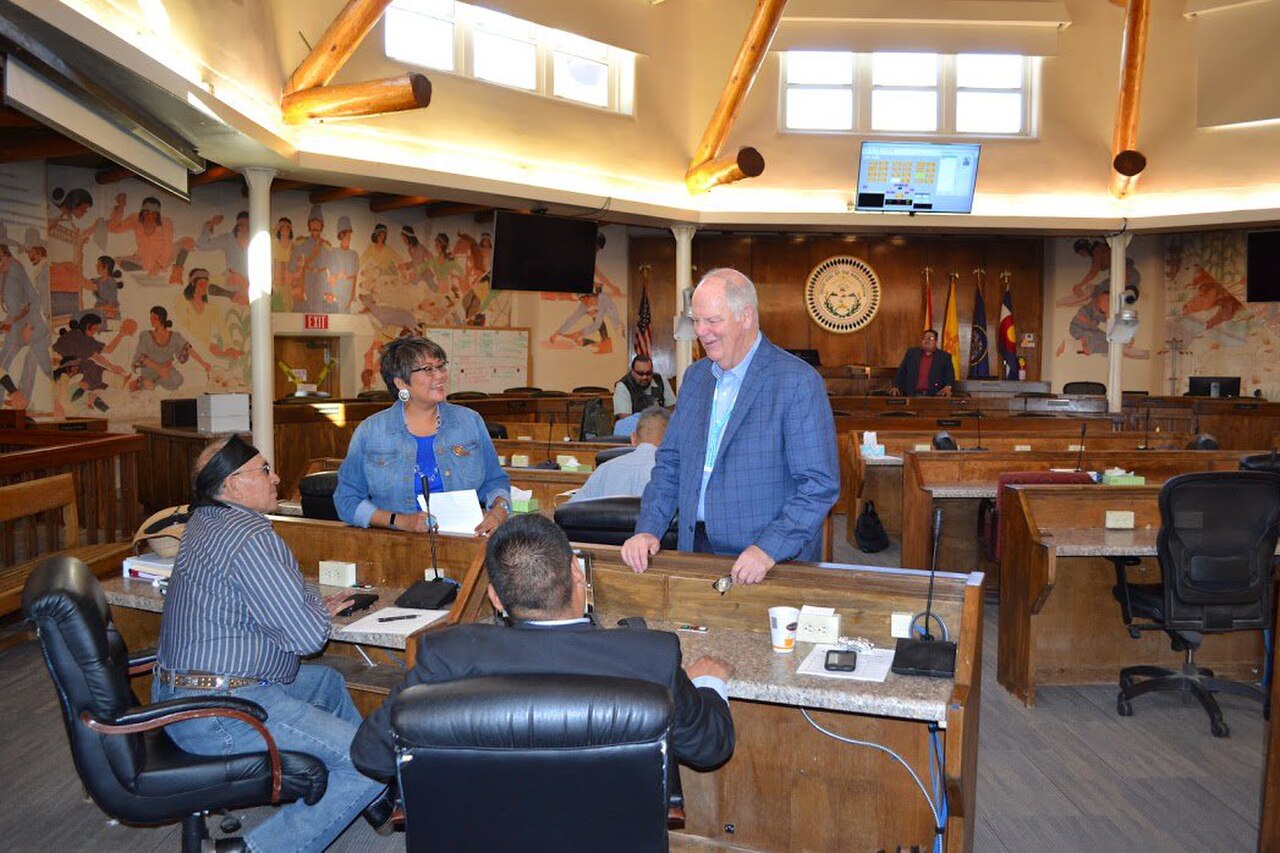
The consent requirement for exhibition is, at its core, an interpretation provision. Before displaying covered items, institutions must obtain free, prior, and informed consent from lineal descendants, tribes, or Native Hawaiian Organizations. The American Alliance of Museums has clarified that the rule’s intent goes further than consent as a checkbox: institutions should seek tribal input on exhibit design, labeling, and interpretation to ensure accuracy and cultural sensitivity.
“It’s not their job to interpret our historical belongings.”
Tribal leader, quoted in ICT / Indian Country Today, 2024
The interpretation of items on display — how and what was shown to the public — had historically not been discussed with members of the cultures they belonged to. The 2024 rule begins to change that, at least for covered items, by requiring consultation to precede exhibition rather than follow public pressure. California’s State Indian Museum offered one instructive example: rather than covering cases, it developed new interpretive panels explaining NAGPRA itself, inviting visitors into the history of Native American collections and what repatriation means on a human level.
What the rule does not require on interpretation
The rule mandates consent and consultation for covered items — human remains, funerary objects, sacred objects, and objects of cultural patrimony. It does not require tribal co-authorship of all museum interpretation about Indigenous history and culture broadly. It does not mandate that tribes control the narrative in exhibits that do not contain NAGPRA-covered items. The AAM has encouraged institutions to involve tribes in all interpretive decisions as a best practice, but the regulation’s hard floor is narrower than its aspirational ceiling.
Critics from the museum and collector community argue that even the narrower consent requirement has effectively substituted tribal authority for institutional discretion across large swaths of collection management. The requirement for obtaining permission for display was a last-minute addition to the NAGPRA regulations, not raised for public consultation before the issuance of new rules in December 2023 — the change that prompted museums’ widespread withdrawal of objects from exhibition.
A structural gap: the Smithsonian
One important and underappreciated fact: the 2024 NAGPRA regulations do not apply to the Smithsonian Institution’s museums. The Smithsonian operates under the separate 1989 National Museum of the American Indian Act, which maintains different standards — including “preponderance of the evidence” for affiliation rather than NAGPRA’s newer “clearly and reasonably identify” standard.
The political threat
In March 2025, President Trump signed Executive Order 14253, titled “Restoring Truth and Sanity to American History.” The order claimed the Smithsonian “has, in recent years, come under the influence of a divisive, race-centered ideology,” and directed the removal of what it characterized as “divisive narratives” from Smithsonian museums. Exhibits were specifically cited for promoting “narratives that portray American and Western values as inherently harmful and oppressive.”
The collision with NAGPRA’s interpretive framework is direct. The 2024 rule requires deference to Indigenous knowledge precisely because that knowledge often tells a history of dispossession, forced removal, and the violent severing of communities from their ancestors and sacred objects. That is not ideological framing — it is the factual basis on which the law rests. Covering exhibit cases in response to the consent requirement is compliance. Genuinely centering tribal interpretive authority in what replaces those exhibits is the harder, and legally less mandated, work — and in the current political climate, it is the work most at risk.
The UK and Europe: a different framework, similar gaps

| Dimension | United States (NAGPRA) | UK & Europe |
|---|---|---|
| Legal basis | Federal statute with enforceable deadlines and fines | Voluntary policy; governing statutes often prevent return |
| Who is covered | Federally recognized tribes & Native Hawaiian Organizations | No defined class; typically former colonial territories |
| Enforcement | DOI fines, Federal Register obligations, 2029 deadline | Reputational pressure; Charity Commission oversight |
| Major obstacle | Capacity, funding, political pressure on interpretation | National heritage laws that bar deaccessioning |
| International reach | None — domestic only | Primarily international (Africa, Asia, Oceania) |
The US advantage: enforceable law
NAGPRA is, at its core, a federal statute with regulatory teeth. Institutions that receive federal funds are legally required to comply. They face fines, Federal Register obligations, and now the 2029 deadline backed by Interior Department enforcement authority. This legal architecture has no equivalent in the UK or across most of Europe. In both contexts, repatriation remains largely voluntary, guided by institutional policy, ethical frameworks, and diplomatic negotiation rather than binding law.
The UK: good intentions, structural blockage
In the UK, the central obstacle to repatriation is not political will at the museum level — it is law. National museums like the British Museum are generally prohibited by their governing Acts from “disposing” of objects from their collections, including for the purposes of repatriation. The Charities Act 2022 offered a potential pathway, but when the Labour government brought the relevant provisions into force in November 2025, it excluded 16 national museums — including the British Museum, Tate, and the National Gallery — due to existing statutory restrictions on those organizations.
The result is an awkward compromise: smaller charitable museums now have a route to repatriate on moral grounds with Charity Commission approval, but the institutions holding the largest and most contested collections are still legally blocked. The director of the British Museum has ruled out any move toward restitution, saying he has no plans to change the museum’s policy against permanently deaccessioning artifacts, which would require an act of Parliament. Advocates have been pointed in their response: Amy Shakespeare of Routes to Return argued these museums “continue to hide behind legislation that they claim makes them unable to engage in repatriation.”
Meanwhile, a 2024 policy briefing called for the UK to create a national, funded policy on repatriating Indigenous human remains and cultural property, arguing that “the UK’s museum sector has already been slowly undertaking this work with little support for over 30 years” and has the opportunity to become a world leader in international repatriation. As of mid-2026, no such national policy exists.
Europe: frameworks without mandates
Continental Europe has been moving toward repatriation — but through non-binding guidelines rather than law. France and Germany have been the most active, spurred in large part by the 2018 Sarr-Savoy Report and pressure around African colonial collections. In October 2025, Germany’s Culture and Media Minister and Länder Ministers of Culture issued Joint Guidelines on the Handling of Cultural Assets and Human Remains from Colonial Contexts, expressing a willingness to engage in repatriation and prioritizing the return of human remains — while requiring that the nation state must give explicit consent for any repatriation.
The Netherlands has gone further in practice, with the Dutch government approving plans to repatriate colonial-era artifacts and returning 800 objects to Indonesia in 2025. But these are policy decisions, not legal mandates. No EU-wide repatriation framework exists, and individual country approaches vary widely.
The core contrast
The American framework has two features the UK and Europe lack: a specific population it covers (Native Americans and Native Hawaiian Organizations, defined by federal recognition), and enforceable legal obligations tied to federal funding. But the US framework has its own significant blind spot by comparison: it is entirely domestic. NAGPRA has never addressed the return of items to international Indigenous communities, and international repatriation from American institutions proceeds, where it proceeds at all, through diplomatic and voluntary channels — the same patchwork that currently frustrates advocates in the UK and Europe.
The University of Glasgow’s Hunterian offered one of the more striking recent examples of what voluntary international repatriation looks like in practice: in October 2025, it repatriated ancestral human remains — predominantly of Khoi, San, and other Indigenous origins, unethically collected during the late 19th and early 20th centuries — to South Africa at a ceremony in Glasgow. There was no legal compulsion. There was no NAGPRA equivalent. There was institutional will, diplomatic coordination, and a ceremony. That is what repatriation looks like without law behind it.
The broader stakes
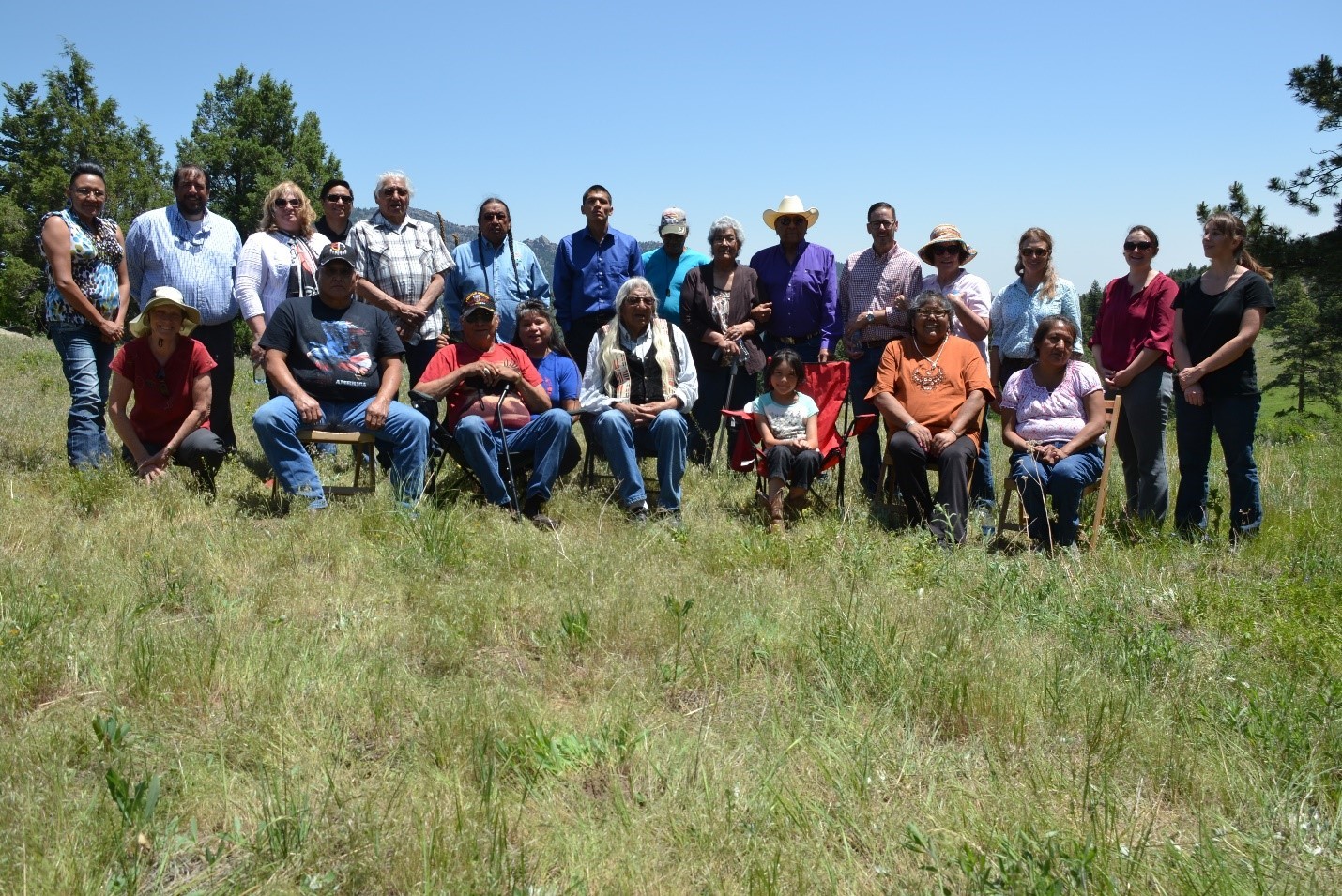
In 2024, institutions returned more than 10,300 Native American ancestors to tribes — the third-biggest year for the repatriation of ancestral remains under NAGPRA. That is real, measurable progress. But it exists alongside tens of thousands of ancestors still held in institutional collections, compliance that remains uneven across institution type, geography, and capacity, and a political environment in which the interpretive authority the 2024 rule sought to shift is now itself contested.
Across all three contexts — the United States, the United Kingdom, and Europe — the fundamental tension is the same: institutions built during the colonial era to accumulate and display the material culture of conquered peoples are now being asked, with varying degrees of legal compulsion, to relinquish that material and the authority to interpret it. The 2024 NAGPRA Final Rule is the most legally robust framework anywhere in the world for doing that. Its limits are real. Its enforcement is still uncertain. And the work of honoring what it requires remains, above all, human.